The Tuisau 3-Channel 4K Dash Cam is a car camera system built to record the front, interior, and rear of a vehicle at the same time. It combines 4K front recording with 1080P interior and rear cameras, along with WiFi, GPS, night vision features, parking mode, and a 64GB card included in the package. For drivers who want broader coverage than a single-lens dash cam can provide, this format may be useful because it adds cabin and rear views to the standard road-facing camera.
Quick Overview
This dash cam is designed for drivers who want a multi-angle recording setup in one device. The three-camera layout can be useful for everyday commuting, family travel, and rideshare driving, where having footage of the road, the cabin, and the back of the vehicle may help provide a fuller record of events. The included 64GB card means the system can be set up without needing to source storage separately at the start.
| Product Type | 3-channel dash cam |
|---|---|
| Brand | Tuisau |
| Video Layout | 4K front, 1080P interior, 1080P rear |
| Connectivity | WiFi |
| Navigation Data | GPS |
| Night Recording | Night vision |
| Parking Feature | Parking mode |
| Included Storage | 64GB card |
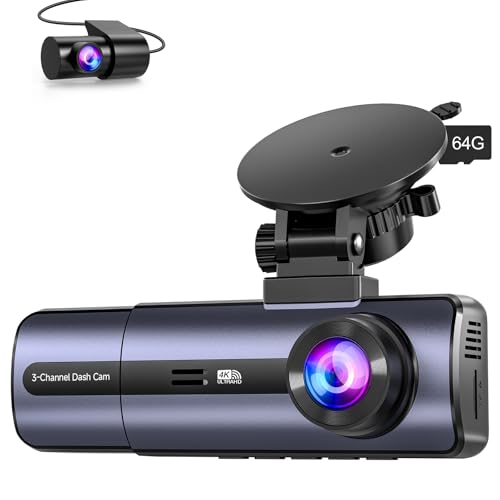
What This Dash Cam Is Designed to Do
A 3-channel dash cam records more than the view through the windshield. In this case, the front camera captures the road ahead at 4K resolution, while the interior and rear cameras each record at 1080P. That arrangement may appeal to drivers who want a more complete record of what happens inside and around the vehicle.
The extra cabin camera can be relevant for rideshare and family use, where passengers or back-seat activity may matter. The rear camera adds another angle that can help document traffic or incidents behind the vehicle. Together, these views create a broader recording setup than a traditional single-lens dash camera.
Key Features
4K Front, 1080P Interior, and 1080P Rear Recording
The most notable feature is the three-camera layout. The front camera records in 4K, while the interior and rear cameras record in 1080P. In practical terms, the front view is intended to capture more detail on the road, while the other two cameras extend coverage to the cabin and the rear of the car.
This can be helpful if you want a single device to cover multiple directions rather than installing separate cameras. It is also useful for drivers who prefer a more complete video record during long trips or daily commutes.
Night Vision
Night vision is included for low-light recording. Dash cams are often used at night, during early morning drives, or in parking environments where lighting is limited. Night vision can help the camera continue recording when conditions are darker, although actual visibility still depends on the surroundings and lighting available.
WiFi for App-Based Access
WiFi support makes it easier to connect the camera to a phone or other compatible device for viewing and managing footage. For everyday use, that can reduce the need to remove a memory card whenever you want to review a clip. It may also make it more convenient to check recordings after a driving incident or a parking event.
GPS Functionality
The built-in GPS feature is intended to add location-related information to recordings. In a dash cam, GPS is commonly used to track route data and speed information alongside video. That can be useful when you want a more complete record of a drive, especially for commuting, business use, or documenting incidents on the road.
Parking Mode
Parking mode is designed to keep an eye on the vehicle while it is unattended. For drivers who park on the street, in shared lots, or in busy areas, this feature may provide an added layer of monitoring when the engine is off. The exact behavior of parking mode can vary by setup, so installation details should be checked carefully before use.
64GB Card Included
The included 64GB card gives the system a starting point for storage right away. That is practical for users who want to install the camera and begin recording without first choosing a separate card. If you expect extended recording needs, it is still worth checking the device’s storage limits and loop recording behavior before deciding whether more capacity is needed.
How the Three-Channel Layout May Be Used
The value of a 3-channel system depends on how much coverage you want. A front-only dash cam records the road ahead, which is enough for many drivers. A three-camera system adds interior and rear coverage, which broadens the recorded field and may be useful in situations where more than one angle matters.
- Family travel: The interior camera may help capture activity in the cabin during long drives.
- Rideshare or taxi use: Front and cabin recording may be useful for documenting both driving conditions and passenger interactions.
- Daily commuting: The rear camera adds another perspective for traffic events behind the car.
- Parking monitoring: Parking mode can add video coverage while the vehicle is off.
Points Worth Checking Before Installation
Multi-camera dash cams can be more involved than basic models. Before installation, it is worth checking how the front, interior, and rear cameras will be routed in your specific vehicle. Cabling, camera placement, and power connection all affect how convenient the system is to use.
You may also want to confirm where the rear camera should be mounted and how the interior camera is intended to view the cabin. If you drive a larger vehicle, SUV, or rideshare vehicle, camera placement can have a noticeable effect on what each lens captures.
Memory card handling is another practical point. Since the unit includes a 64GB card, initial setup is simpler, but users who keep long recordings or drive frequently may want to understand how loop recording and storage limits work over time.
Everyday Use and Practical Fit
This type of dash cam is generally suited to drivers who want more than basic windshield footage. It can fit everyday use in personal cars, family vehicles, and work-related driving where cabin visibility matters. The front, inside, and rear layout provides a more complete record than a single-camera system, which may be helpful if you want footage from multiple directions in one device.
WiFi and GPS add convenience rather than changing the core function of the camera. WiFi is useful for accessing clips without removing the card, while GPS adds route context to the recording. Together, they make the system more practical for drivers who may need to review footage later.
Parking mode adds another layer of utility, especially for drivers who regularly leave a vehicle unattended in public areas. If that matters to you, it is worth checking how the camera is powered and whether the installation setup supports the kind of parking monitoring you want.
Things to Consider
- Three cameras mean more setup: A front, interior, and rear system usually takes more planning than a single-lens model.
- Parking mode may depend on installation: Check how the feature is powered and what is required for it to function as intended.
- Storage needs vary: A 64GB card is included, but longer recording needs may require attention to card capacity and recording settings.
- Camera placement matters: The usefulness of the cabin and rear views depends on how the cameras are positioned in the vehicle.
For the latest product information and specifications, view the current product listing.
Frequently Asked Questions
What does a 3-channel dash cam record?
A 3-channel dash cam records three views at the same time. In this model, that means the front of the vehicle, the interior cabin, and the rear of the car.
Why does the front camera use 4K while the other cameras use 1080P?
Higher resolution on the front camera can help capture more detail in the most road-facing view, while the 1080P interior and rear cameras provide additional coverage for the cabin and back of the vehicle.
Is the included 64GB card enough for regular use?
It can be enough for many basic setups, especially for drivers who review footage often. If you drive frequently or want longer recording storage, it is worth checking whether the system supports larger cards and how loop recording works.
What is the benefit of WiFi on a dash cam?
WiFi makes it easier to connect the camera to a phone or compatible app so you can review, download, or share clips without removing the memory card.
Who may find parking mode useful?
Parking mode may be useful for drivers who leave their vehicle in public lots, street parking, or other unattended locations where monitoring after the engine is off matters.
Final Thoughts
The Tuisau 3-Channel 4K Dash Cam combines front, interior, and rear recording in one system, with WiFi, GPS, night vision, parking mode, and a 64GB card included. That mix makes it a practical option to understand if you want broader vehicle coverage than a simple dash cam can provide. The main value comes from having multiple camera angles in one setup, along with features that support review, location tracking, and unattended parking use.