The Firecore Telescoping Pole with Laser Mount is a floor-to-ceiling support pole for positioning rotary and line lasers during layout and alignment work. It combines a telescoping pole, a mounting bracket, and a spring-loaded base so the laser can be held at a chosen height without relying only on a wall or tripod setup. For projects that involve ceilings, framing, tile, cabinets, trim, or door and window installation, this type of pole is often used to keep a laser tool in a stable and visible position.
Quick Overview
This Firecore laser pole is built around a simple idea: give a laser level a secure vertical support between the floor and ceiling. The pole extends through multiple sections, and the mounting bracket can be set at different heights along the rod. A spring-loaded base creates tension against the surfaces above and below, which helps keep the setup in place while you work.
The product also includes a tripod, which adds another setup option and can help with placement and stability depending on the task. The clamp accepts common laser mounting threads, including 1/4″-20 and 5/8″-11, which makes it usable with many line laser and rotary laser setups.
| Product Type | Telescoping laser pole with mount and tripod |
|---|---|
| Brand | Firecore |
| Maximum Height | 12.14 ft |
| Sections | Four telescopic rods and one tail rod |
| Mounting Threads | 1/4″-20 and 5/8″-11 |
| Material | Aluminum with iron thread connectors |
| Compatibility | Line lasers and rotary lasers |
| Application | Ceiling drywall, framing, tiling, cabinets, borders, moldings, trims, door and window installation |
What This Tool Is For
A telescoping laser pole is used to place a laser level at a controlled height between two fixed points, usually the floor and ceiling. That can be helpful when you need a laser line to stay consistent across a room while you work on installation or layout tasks. Unlike a simple stand, this style of pole is meant to span vertical space and keep the tool positioned where the beam is needed.
In everyday use, this can matter when marking level lines for cabinetry, setting trim heights, aligning framing details, or working on ceiling-related jobs. The point is not to add complexity. It is to give the laser a more adaptable support option than hand placement or a basic tripod alone.
Design and Build
The Firecore pole uses aluminum for the main structure, with iron thread connectors that have a galvanized surface treatment. That combination is meant to support the assembly while helping the connector area stand up to rust and wear. The connector design also aims to make disassembly easier and reduce the risk of the adapter sticking in the adjoining pole section.
The pole includes black graduations on a yellow background, marked in both inches and centimeters. Those markings make it easier to estimate height and repeat a position when moving the bracket up or down the rod. For layout work, visible scale markings can be more useful than a plain pole because they provide a quick reference without extra measuring tools.
The spring-loaded base is another important part of the design. Instead of depending only on a loose contact point, the base creates compression between the floor and ceiling or between other surfaces. The foot and head plates have a non-slip surface, and the larger contact area helps distribute force at the ends of the pole. Sturdy foot pedals are included to make setup easier.
Mounting Bracket and Adjustment Range
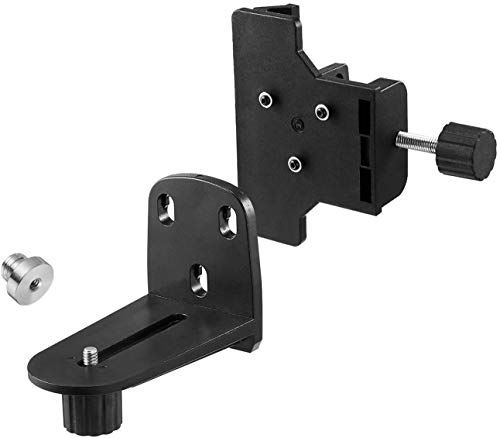
The mounting bracket is one of the main features that separates this type of laser pole from a simple support rod. It can be positioned at different heights on the pole, which lets you place the laser where the job requires it. The fine-tuning knob allows small height adjustments within 2.75 inches, and the bracket rotates 360 degrees horizontally.
That kind of movement can be useful when you want to make small changes after the pole is already in place. The locking knob helps hold the chosen height. The bracket also includes a removable back clip and strong magnets, so it can attach to metal surfaces when needed. Slots for screws, nails, raceways, or optional straps add more ways to secure it, which may be helpful in work environments where a single attachment method is not ideal.
The threaded mount includes both 1/4″-20 and 5/8″-11 adapters. Those are common connection sizes for laser tools, so the pole can work with a wide range of compatible instruments. If you already own a laser level, it is still worth checking the thread size before use, since the correct mount is essential for a secure fit.
Tripod Support and Setup
This Firecore setup includes a tripod, which adds another layer of support during use. The tripod is part of the overall positioning system, helping with placement and stability. A tripod can be useful when a project calls for a more flexible setup or when you want additional support before locking the pole into its final position.
For many users, the practical benefit of a tripod is simple: it can make setup more manageable. In a room with limited space or uneven surfaces, having both a telescoping pole and tripod support can offer more options than a single mounting method.
Compatibility and Common Applications
The pole is intended for line lasers and rotary lasers, and it is compatible with brands such as Dewalt, Bosch, and Stanley, along with other tools that use standard 1/4″-20 or 5/8″-11 threads. That makes it a flexible support accessory for different jobsite and home improvement tasks.
Typical uses include:
- Ceiling drywall work
- Framing and layout
- Tiling alignment
- Cabinet installation
- Border, molding, and trim placement
- Door and window installation
Because the pole supports positioning between the floor and ceiling, it can be especially useful in rooms where wall space is limited or where a fixed-height reference is needed across a larger area.
How the Height Markings Help
Measured height markings are a practical detail rather than a decorative one. On a telescoping pole, the ability to see approximate height in both inches and centimeters makes it easier to return to a previous setting or compare one position to another. That can matter when you are repeating the same line height across multiple walls or working from one room to the next.
The listed maximum height is 12.14 ft when fully assembled with all sections and the tail rod. For taller rooms or jobs near that range, the usable span is one of the main details to check before buying. If your space is smaller, the extension length may still be useful because it gives you room to place the laser at many intermediate heights.
Practical Things to Consider
Before choosing a telescoping laser pole, it helps to think about the type of work you do most often. This model is built for laser placement and support, not for general-purpose clamping or heavy material handling. Its value comes from vertical positioning, stable contact, and bracket adjustability.
Consider the following points:
- Thread size: Make sure your laser tool uses 1/4″-20 or 5/8″-11 mounting hardware.
- Room height: The maximum height may be more than you need, but it should suit your typical space.
- Surface conditions: The spring-loaded base depends on floor and ceiling contact, so the work area matters.
- Use case: It is most useful for alignment and layout tasks rather than general support duties.
- Transport and storage: Telescoping parts are helpful when the pole needs to be moved between jobs, though setup style and storage space still matter.
Who It May Be Suitable For
This product may suit contractors, remodelers, and DIY users who regularly work with rotary or line lasers. It is also relevant for people handling interior projects where laser height needs to be controlled from floor to ceiling. If you often install trim, cabinets, or ceiling-related materials, a pole like this can offer a more stable reference point than improvised supports.
It may be less useful if you only use a laser level occasionally or if your projects do not require floor-to-ceiling positioning. In that case, a simpler tripod or stand might be enough. The Firecore pole makes the most sense when adjustable vertical placement is part of the regular workflow.
Maintenance and Handling
Basic care for a telescoping laser pole is usually straightforward. Keep the threaded connectors clean, avoid forcing the sections if they resist movement, and store the pole so the parts are not bent or damaged. Since the design includes moving joints, a careful setup routine helps maintain smooth operation over time.
If the pole is used on job sites with dust or debris, wiping down the sections before collapsing them can help reduce wear. The non-slip feet and contact surfaces should also be checked periodically so they remain clean and functional.
Frequently Asked Questions
What kind of laser tools can this pole support?
The pole is made for line lasers and rotary lasers that use 1/4″-20 or 5/8″-11 thread mounting hardware. Checking the thread size on your tool is the most important compatibility step.
Does the pole only work at one height?
No. The pole uses telescoping sections and a movable bracket, so the laser can be positioned at many different heights between the floor and ceiling.
Why does the bracket rotate?
The 360-degree horizontal rotation helps with positioning the laser where you need it. That can be useful when adjusting line direction during layout work.
What is the spring-loaded base for?
The spring-loaded base creates pressure between the pole and the floor or ceiling so the assembly stays in place more securely during use.
What types of jobs is this pole commonly used for?
It is commonly used for drywall, framing, tiling, cabinets, moldings, trims, and door or window installation, especially when a laser level needs a stable vertical support.
For the latest product information and specifications, view the current product listing.
Final Thoughts
The Firecore Telescoping Pole with Laser Mount is a practical support accessory for laser-based layout work. Its adjustable height, spring-loaded base, movable bracket, and common thread compatibility make it relevant for a range of interior installation tasks. For users who need a more controlled way to position a laser level between floor and ceiling, it offers the kind of features that are worth checking closely before purchase.