The Bosch 120-Volt Top-Handle Jigsaw Kit JS365 is a corded jigsaw built around familiar controls and practical features for cutting wood, aluminum, and steel. It is part of Bosch’s top-handle jigsaw line and uses a variable-speed setup, a tool-less blade-change system, and four orbital-action settings. For users comparing jigsaws for workshop tasks, trim work, or general DIY cutting, the JS365 is the kind of tool that is worth understanding in terms of how its controls affect day-to-day use rather than just its numeric specifications.
Quick Overview
This jigsaw is designed for controlled cutting in materials commonly handled in home improvement and workshop projects. The top-handle form factor gives the user a familiar grip position, while the variable-speed control and accelerator trigger provide a way to adjust how the tool behaves during a cut. Bosch also includes dust control features and a die-cast foot, which are practical details that matter when accuracy and workspace visibility are important.
One of the main points of interest is the tool-less blade-change system. That makes blade swaps more convenient when moving between different blade types or when switching from a straight cut to a material-specific blade. The blade ejection lever also reduces the need to touch a hot blade immediately after use.
| Product Type | Top-handle jigsaw kit |
|---|---|
| Brand | Bosch |
| Voltage | 120-Volt |
| Power | 6.5 Amp |
| Speed | Up to 3,000 SPM |
| Cutting Angle | 45 degree bevel cuts |
| Blade System | Tool-less blade change with blade ejection lever |
| Orbital Settings | Four orbital-action settings |
| Application | Wood, aluminum, and steel |
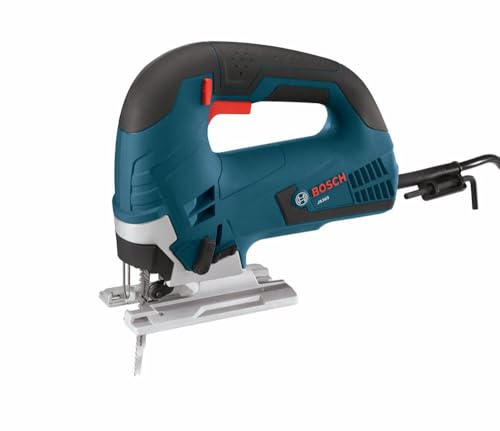
What the Bosch JS365 Is Designed to Do
The Bosch JS365 is a corded top-handle jigsaw intended for cutting tasks that benefit from maneuverability and control. Jigsaws are commonly used for curved cuts, cutouts, bevel work, and general shaping. This model adds features that can help users adapt the tool to different materials and cutting styles without needing a more specialized saw for each job.
The four orbital-action settings are especially relevant for people who work across different materials. Orbital action changes how the blade moves through the cut, which can affect cut speed and smoothness. Bosch describes the settings as ranging from smooth to more aggressive cutting behavior. In practical terms, that makes the tool more flexible for general use, but it also means the user still needs to choose the right blade and setting for the material at hand.
Blade Changes and Cutting Control
Blade changes are one of the most practical parts of any jigsaw, and the JS365 focuses on making that process simpler. The tool-less blade-change system is designed for fast insertion, while the blade ejection lever helps remove the blade without direct contact. That can be useful when changing blades frequently or when a blade has become hot after use.
The variable-speed dial and accelerator trigger work together to control cutting speed. The dial sets the maximum speed, while the trigger determines operating speed in use. For a jigsaw, that combination can be helpful because different materials and cut types often respond better to different speeds. A slower, steadier approach may be preferable for more delicate work, while faster operation can be useful for less demanding cuts.
The model is described with up to 3,000 strokes per minute. For readers who are comparing tools, that figure helps indicate the upper range of blade movement. It does not replace blade choice or technique, but it does provide a sense of the tool’s operating range.
Dust Control and Work Surface Support
The adjustable dust blower is another practical detail. When cutting, dust and debris can obscure the cut line, which makes it harder to stay on track. A blower that clears the line can improve visibility during use, especially when following a marked curve or making a precise start to a cut.
The die-cast foot adds stability at the contact point between the tool and the workpiece. Bosch also includes a steel insert and on-board bevel Allen key storage in this area. Those details may not sound dramatic, but they matter because the foot is part of the saw that helps maintain contact and support during a cut, and integrated storage keeps a needed adjustment tool close at hand.
Materials and Typical Uses
This jigsaw is set up for wood, aluminum, and steel. That makes it a useful general-purpose cutting tool for a range of workshop and home projects, provided the correct blade is selected for each material. Jigsaws are commonly used for tasks such as:
- cutting curves or rounded shapes in sheet goods or boards
- making interior cutouts for openings and fixtures
- trimming material to fit during remodeling or repair work
- working on light metal or aluminum where a handheld saw is more practical than a larger cutting tool
The JS365’s four orbital settings help support that kind of flexibility. A smoother setting can be useful when cut quality matters more than speed, while a more aggressive setting can be used when faster material removal is preferred. The exact result still depends on the blade, the material, and how the saw is guided.
Design and Handling
The top-handle layout is one of the defining features of this Bosch jigsaw. Many users prefer this shape because it offers a natural, upright grip position that can feel familiar during curved or handheld cutting. For work that involves guiding the blade along a line, the handle position may make the saw easier to steer than a barrel-grip design for some users.
Because this is a corded tool, it is intended for use near a power source rather than on a battery platform. That can be a practical advantage for extended workshop tasks where constant power is more important than portability. It also means users should plan around cord management and workspace layout.
What to Check Before Using It for a Project
When comparing a jigsaw like the JS365 with other cutting tools, a few details are worth checking before starting a project:
- Blade compatibility: Make sure the blade type matches the material and cut style you need.
- Cutting angle needs: The tool supports 45 degree bevel cuts, so confirm whether your project needs bevel capability.
- Material thickness and type: Different materials call for different blades and speeds.
- Workspace visibility: The dust blower helps, but dust extraction setup and lighting still matter.
- Power access: As a corded saw, it works best where you have a suitable electrical outlet nearby.
These practical checks can help determine whether the JS365 fits the job, especially if you are choosing between a jigsaw and another type of saw.
Included Protection
Bosch backs this top-handle jigsaw with a one-year limited warranty. That is a straightforward detail rather than a performance claim, but it can matter to buyers who want to understand the product’s support terms. Warranty coverage is always worth confirming against the current product documentation if it matters to your purchasing decision.
For the latest product information and specifications, view the current product listing.
Who It May Be Suitable For
The Bosch JS365 may appeal to people who want a corded jigsaw for general workshop and home-improvement tasks. It is especially relevant for users who value a tool-less blade-change system, variable speed control, and the option to make bevel cuts without moving to a different saw.
It can also be a practical choice for users who work across multiple materials and want a single jigsaw that supports wood, aluminum, and steel with appropriate blade selection. Since jigsaws are often used for shaping and fitting rather than straight rip cuts, the JS365’s focus on control and visibility fits that kind of work well.
Things to Consider Before Buying
As with any jigsaw, the JS365’s usefulness depends on the project. It is not a substitute for every cutting tool, and it is best evaluated alongside the jobs you expect to do most often. If your work involves only occasional straight cuts, another tool may be more efficient. If you need portable, handheld cutting with the ability to follow curves or make cutouts, a jigsaw is usually a more flexible choice.
It is also worth remembering that cutting results depend heavily on blade selection. The tool supports the cutting approach, but the blade does much of the work in the material. Matching the blade to the task is important for both cut quality and ease of use.
Frequently Asked Questions
What type of cutting is a top-handle jigsaw commonly used for?
A top-handle jigsaw is commonly used for curved cuts, cutouts, bevel work, and general shaping in materials such as wood and metal, depending on the blade used.
Does the Bosch JS365 support bevel cuts?
Yes. This model supports 45 degree bevel cuts, which can be useful when a project calls for angled edges.
What does the orbital-action setting do?
Orbital action changes the blade motion to help balance smoothness and cutting aggressiveness. The JS365 offers four settings, which gives the user more control over how the saw behaves in different materials.
Is the blade change process tool-free?
Yes. The JS365 uses a tool-less blade-change system and a blade ejection lever for easier blade removal.
What materials is this jigsaw intended to cut?
The JS365 is set up for wood, aluminum, and steel, with the blade choice determining how well it suits each material.
Final Thoughts
The Bosch 120-Volt Top-Handle Jigsaw Kit JS365 is a straightforward corded jigsaw with features that support practical cutting work. Its main strengths are the tool-less blade system, variable-speed control, four orbital settings, and dust blower. For users who want a jigsaw for controlled, general-purpose cutting in wood, aluminum, or steel, it offers a clear feature set without unnecessary complexity.
For shoppers comparing jigsaws, the JS365 is most useful as a tool that focuses on everyday cutting control and ease of handling rather than specialized extras. That makes it a sensible option to examine closely if your projects call for a flexible top-handle saw.