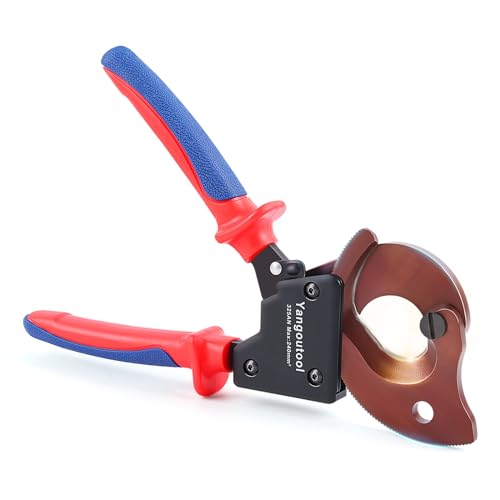
The Yangoutool Ratchet Cable Wire Cutter is a hand tool for cutting copper and aluminum cables with a ratcheting action that reduces the force needed for each cut. It is built for electrical work where clean, controlled cable cuts matter, especially when working with heavier wire sizes or in tighter spaces where a larger cutter may be harder to maneuver.
Quick Overview
This Yangoutool cable cutter is designed for cutting electrical wire made from copper or aluminum. Its ratchet mechanism holds the cable in place and advances the cut in stages, which can make the tool easier to use than a simple single-blade cutter on thicker conductors. The product information also includes a clear safety note: it is not suitable for steel or steel wire, and it should not be used on live wires.
For people working on electrical installation, cable preparation, or workshop tasks that involve large copper or aluminum conductors, the cutter is intended to provide straight cuts with steady grip and less hand strain than tools that require continuous pressure.
| Product Type | Ratchet cable cutter |
|---|---|
| Brand | Yangoutool |
| Application | Cutting copper and aluminum cables |
| Capacity | Up to 240 mm², Max AWG 600MCM |
| Safety Note | Not for steel or steel wire, and not for live wires |
What This Cable Cutter Is For
The Yangoutool Ratchet Cable Wire Cutter is intended for cutting electrical cables rather than general-purpose metal cutting. The product details point to copper and aluminum cable work, which makes it relevant for electrical setup, cable routing, and other jobs where a clean cable end is important. Ratcheting cutters are commonly chosen for thicker wire because they let the user complete a cut in steps instead of forcing the blades through the material all at once.
This kind of tool is especially useful when the cable is too large for standard pliers or basic diagonal cutters. The ratchet design helps keep the cut controlled, which can matter when cutting larger conductors that need a straighter finish and more consistent handling.
Key Features
Ratchet action is the main feature of this cutter. The mechanism grips the cable and advances the cut gradually. In practical terms, that can make the tool easier to use on thicker wire because it reduces the amount of force needed at any one time.
Large cutting capacity is another important point. The cutter is rated for up to 240 mm², with a maximum of AWG 600MCM. That places it in a category suited to substantial copper or aluminum cable rather than small household wire.
Compact handling is also mentioned in the product information. A more compact cutter can be helpful in tighter working areas where there is not much room to swing a larger tool. That does not make it a specialized tool for every cramped location, but it does suggest practical use where access is limited.
Stable cable grip is part of the design. The ratchet driving unit is meant to hold the cable steadily during the cut, which supports cleaner, straighter results. For users working with heavier wire, that kind of control may be more useful than speed alone.
Safety and Material Limits
This cutter is not for steel or steel wire. That restriction matters because steel is much harder than copper or aluminum, and using the wrong cutter can damage the blades or create an uneven cut. It should also not be used on live wires. Anyone planning electrical work should confirm that the line is de-energized before using a manual cable cutter.
These limitations are important because a cable cutter like this is purpose-built. It is intended for specific conductor types, not for every cutting task in a workshop or on a jobsite. Matching the tool to the material helps protect both the tool and the person using it.
How the Ratcheting Design Helps
Ratcheting cable cutters are useful because they divide the cutting motion into stages. Instead of asking the user to force the blades through the wire in one motion, the tool grips and advances step by step. That can make the cut feel more controlled, especially on thicker conductors.
In everyday use, this design may help with:
- reducing hand fatigue during repeated cuts
- keeping cable placement steadier while cutting
- supporting a straighter cut on larger conductors
- making the tool easier to manage in tighter work areas
The trade-off is that ratcheting cutters are usually slower than simple cutters for small wire. They are built more for control and leverage than for quick trimming of thin cable.
Common Uses
This type of cable cutter is commonly used in electrical work where copper or aluminum conductors need to be shortened or prepared for installation. It may be useful for:
- electrical cable cutting during installation or repair
- preparing copper or aluminum wire for terminations
- cutting larger conductors in workshops or utility-style work
- general cable trimming where a clean, controlled cut is preferred
Because the tool is limited to non-steel cable, it is not a universal cutting solution. It fits best when the task matches the material type and the cutter size range.
Design and Construction Notes
The product information emphasizes a robust construction and a unique ratchet driving unit. That suggests a focus on holding cable securely while the cut is being made. For a hand tool in this category, the way the blades and ratchet mechanism work together is often more important than decorative design features.
The product details also describe the tool as effective in tight spaces. While that does not replace proper access or good working position, it indicates that the overall form is meant to be practical rather than bulky. For users who often work around panels, cabinets, or partially crowded cable runs, that can be worth checking.
Who It May Be Suitable For
This Yangoutool cable cutter may be suitable for people who regularly handle copper or aluminum cable and need a manual tool for larger wire sizes. It may appeal to:
- electricians working with thicker conductors
- DIY users doing serious wiring projects
- maintenance workers who need a manual cable-cutting tool
- shop users who cut copper or aluminum cable as part of regular tasks
It is less suitable for people who mainly cut small household wire, steel wire, or mixed materials. It is also not intended for live-wire use, so electrical safety procedures still matter.
Things to Check Before Buying
For a tool like this, the most important checks are straightforward. First, confirm that the cable you need to cut is copper or aluminum, since that is what the cutter is intended for. Second, check that the cable size falls within the 240 mm² limit. Third, make sure your work does not involve steel wire or live conductors.
If you work in confined areas, the compact handling described for this cutter may be helpful. If you mainly need a cutter for lighter gauge wire, a smaller tool may be more practical. The right choice depends on cable type, conductor size, and the level of control you want during cutting.
Comparable Tool Types
Within the broader category of wire cutters, ratchet cable cutters sit between small diagonal cutters and more specialized heavy-duty cable tools. Compared with standard hand cutters, they are better suited to thicker conductors and often provide more leverage. Compared with powered cutting tools, they are simpler, quieter, and do not require a battery or outlet.
That makes them a practical option for users who want a manual tool for larger electrical cable work without adding another powered tool to the workspace.
For the latest product information and specifications, view the current product listing.
Frequently Asked Questions
What materials can this cutter handle?
It is intended for copper and aluminum cables. It is not suitable for steel or steel wire.
Can it be used on live electrical wires?
No. The product information says it should not be used on live wires. The circuit should be de-energized before cutting.
What does the 240 mm² capacity mean?
That figure refers to the size of cable the cutter is designed to handle. It indicates a tool meant for larger conductors rather than small wire.
Why use a ratchet cable cutter instead of regular pliers?
A ratchet cutter can make large cable cuts easier by applying pressure in stages. That can improve control and reduce hand strain when working with thicker wire.
Is this tool meant for general metal cutting?
No. It is a cable cutter designed for copper and aluminum conductors, not a general-purpose metal cutter for steel or hardened materials.
Final Thoughts
The Yangoutool Ratchet Cable Wire Cutter is a specialized hand tool for cutting larger copper and aluminum cables. Its ratcheting mechanism, 240 mm² capacity, and compact handling make it practical for cable work where controlled cutting matters. The material limits are important, though. It is not for steel and should not be used on live wires. For users whose work matches those requirements, it is a focused tool built for a clear job.